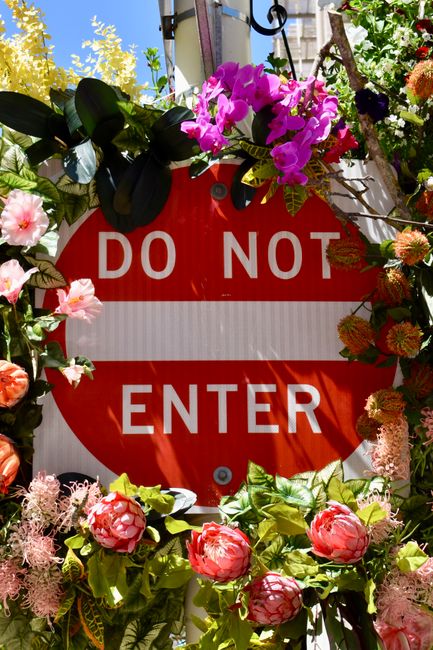
Permits for floral installations near Kennington Oval
Posted on 03/10/2026
Permits for floral installations near Kennington Oval: a practical guide for smooth, compliant displays
If you are planning floral installations near Kennington Oval, the permit side of things can feel like the least romantic part of the job. And yet, it is the bit that can save you from last-minute stress, awkward calls, or a display being moved on the day. Whether you are preparing wedding florals, a branded event piece, or a temporary outdoor installation, understanding permits for floral installations near Kennington Oval helps you work with the location rather than against it.
This guide breaks down what the permit process usually means in plain English, why it matters, who needs it, and how to plan so your flowers arrive looking fresh rather than frazzled. You will also find a checklist, comparison table, and a realistic example from a local event-style setup. Let's keep it practical.
For florists and event planners who need a broader service base as well, it can help to have a trusted local florist in Kennington SE11 who already understands delivery timing, presentation, and the realities of working in London.
Table of Contents
- Why permits matter near Kennington Oval
- How the permit process usually works
- Key benefits and practical advantages
- Who needs a permit, and when
- Step-by-step guidance
- Expert tips for better results
- Common mistakes to avoid
- Tools, resources and recommendations
- Law, compliance, standards and best practice
- Options, methods and comparison
- Case study or real-world example
- Practical checklist
- Conclusion
- Frequently asked questions
Why Permits for floral installations near Kennington Oval Matters
Kennington Oval sits in a busy part of London, which means floral installations there are rarely just a matter of placing arrangements and walking away. You may be dealing with pavement space, access routes, event schedules, vehicle unloading, foot traffic, or the expectations of a venue, estate, or local authority. If any part of the installation sits in a public-facing space, permit requirements can come into play very quickly.
Why does this matter so much? Because flowers are temporary, but the permissions and responsibilities around them are real. A large arch at an entrance, a floral frame near a walkway, or a branded floral wall beside a road might look simple on paper. In practice, it can affect pedestrian flow, visibility, safety, and cleaning obligations. A permit is often the formal way of confirming that your installation is allowed, safe, and timed correctly.
Truth be told, most problems do not come from the flowers themselves. They come from assumptions. Someone assumes the display is "small enough," or that a few hours is fine without notice, or that because it is decorative it does not need approval. That is where trouble starts. The safer approach is to treat every visible installation near Kennington Oval as something that may need sign-off until you know otherwise.
It is also worth thinking about reputation. A polished floral piece outside a venue can elevate the whole event. A poorly handled placement, on the other hand, can create frustration fast. To be fair, no one remembers how lovely the roses were if they were blocking a doorway or had to be removed before guests arrived.
Expert summary: If your floral installation touches public space, access routes, or a venue-managed frontage near Kennington Oval, check permit needs early. Early planning almost always reduces cost, stress, and redesigns later.
How Permits for floral installations near Kennington Oval Works
The permit process is usually less mysterious than it sounds. In most cases, someone reviews what you want to install, where it will go, how long it will stay in place, how it will be fixed, and whether it creates any risk or obstruction. The exact process depends on whether the space is privately managed, venue-controlled, or part of a public highway or footway.
A floral installation permit may involve a venue booking agreement, written approval from property management, or a formal licence if the display is on or near public land. Sometimes there is more than one layer. For example, a venue may approve the aesthetic concept, but access arrangements still need to work with transport timing and loading restrictions.
The most important thing is not the paperwork itself. It is the information behind it. Decision-makers usually want to know:
- the size and footprint of the installation
- where it will sit in relation to entrances, exits, and walkways
- how it will be installed and removed
- whether it is freestanding, attached, weighted, or tied
- what materials are being used, including foam, water sources, stands, or cables
- how the area will be cleaned and left afterwards
If the display is time-sensitive, you will also need to think about delivery windows. Flowers do not enjoy sitting in a van for too long on a warm afternoon. The scent can be glorious, but the stems do not care about romance. They care about water, shade, and timing.
In practical terms, the process often looks like this:
- Confirm the exact location and who controls it.
- Describe the installation clearly with drawings or reference images.
- Ask whether a permit, licence, or written approval is needed.
- Share dimensions, fixing method, and removal plan.
- Allow time for review, amends, and final approval.
- Book delivery and installation once permissions are confirmed.
If you are arranging a wider floral order too, services such as flower delivery in Kennington SE11 can be useful when you need fresh stems to arrive in sync with installation time.
Key Benefits and Practical Advantages
Getting permits sorted properly is not just about avoiding trouble. It actually improves the whole project. A clear approval process gives you more control, better communication, and a cleaner end result. That matters whether you are planning a small ceremonial display or a large event feature.
Here are the biggest practical advantages:
- Less risk of interruption: If security, venue staff, or local officers know what is happening, the installation is far less likely to be delayed or challenged.
- Better design decisions: Knowing the rules early helps you choose a structure that fits the space, rather than forcing a design at the last minute.
- Safer access and movement: Permit discussions often flag issues around entrances, crowd flow, or emergency access before they become problems.
- Cleaner handover: A proper removal plan means fewer surprises after the event.
- More professional presentation: A compliant installation tends to look more polished because everything has been thought through.
There is also a commercial benefit. If you are a florist, event planner, or corporate buyer, a smooth permit process protects your time. Nobody wants to spend a morning chasing approvals while guests are already on the way. Not exactly the vibe anyone wants.
For recurring work, it can help to keep a standard pack of details ready: drawings, product descriptions, cleaning responsibilities, and contact details. That way, each new floral installation near Kennington Oval starts from a known baseline instead of from scratch.
Who This Is For and When It Makes Sense
Permit requirements are most relevant when the installation is visible, large, fixed in place, or set in a location that affects access. If you are simply sending a hand-tied bouquet to a private address, you will usually not need anything beyond delivery planning. But once the flowers move into semi-public or public-facing space, the picture changes.
You may need a permit or formal approval if you are:
- creating a floral arch or doorway feature
- setting up branded florals at an event entrance
- installing flowers on a pavement-facing frontage
- using freestanding columns, plinths, or frames
- placing arrangements in a venue courtyard or shared access area
- working for a wedding, launch, photo shoot, or corporate activation
- installing florals near barriers, steps, traffic routes, or security points
It also makes sense when the project is near a landmark-style location such as Kennington Oval, where access and movement can be more sensitive than on a quiet private road. Busy urban settings are not impossible, far from it, but they reward planning.
For example, a couple might want statement flowers for a reception nearby, while a business may want a polished entrance display for a product evening. In both cases, the look may be similar, but the permission route can be different. One is about wedding atmosphere; the other may be about footfall, branding, and site management. The details matter.
Step-by-Step Guidance
If you want the process to feel manageable, do it in a sequence. People often make it harder than it needs to be by designing first and asking questions later. A better order saves time and awkward compromise.
1. Identify the exact site owner or controller
Start by working out who actually controls the space. It may be a venue, managing agent, landlord, event organiser, or local authority. Near Kennington Oval, there can be multiple stakeholders involved in one small area. The faster you identify the decision-maker, the better.
2. Define the installation properly
Do not say "flowers outside the venue" and hope for the best. Be specific. Include size, materials, access requirements, whether it is temporary or part of a longer setup, and how it will be secured. A simple sketch or mood board helps more than people think.
3. Check whether the display affects public access
This is the big one. If it narrows a footpath, blocks a door, interferes with queues, or reduces visibility, the permission process will usually be more detailed. Even a beautiful arrangement can become a problem if it sits in the wrong place.
4. Ask about lead times
Some approvals are quick. Others are not. Build in extra time so you are not squeezed into a corner two days before installation. If you need flowers quickly as well, pairing the approval timeline with same-day flower delivery in Kennington SE11 can be helpful for tighter event schedules, though only if the site rules still allow it.
5. Confirm installation and removal windows
Many headaches happen at the edges of the job: loading, unloading, and take-down. Agree the times in writing. If there is a security gate, limited lift access, or a narrow delivery slot, make sure the florist knows it before the van sets off.
6. Keep records
Save approval emails, site notes, risk notes, and contact numbers. It sounds dull, but when a question comes up on the day, those few emails can save a lot of back-and-forth.
7. Prepare a backup plan
Weather, traffic, and venue changes happen. A backup plan might include alternative securing methods, a second delivery slot, or a slightly smaller build. It is not pessimism. It is just London, really.
Expert Tips for Better Results
After enough event setups, a pattern emerges: the best floral installations are rarely the most complicated ones. They are the ones that fit the site, the timing, and the people managing the space.
- Design for the space, not against it. A restrained structure that suits the entrance will usually look better than an oversized installation that crowds the area.
- Use a clear install plan. List who brings what, who approves it, and who removes it. Everyone should know the chain of responsibility.
- Choose secure mechanics. Weighted bases, discreet supports, and stable frames matter more than people realise. Pretty is lovely. Stable is better.
- Keep materials site-friendly. Some venues prefer dry mechanics, limited water, or low-residue fixings. Ask before turning up with something that leaves a mark.
- Think about the weather. Wind gusts can move lightweight pieces around fast. A still-looking morning can turn blustery by lunchtime.
- Match the flower choice to the duration. If a display needs to last all day, choose flowers and conditioning methods that hold up well. A floristry team can guide this.
A small human tip: if you are unsure whether a design is too ambitious, stand at the site and look at it from the point of view of a guest arriving with a coat in one hand and a phone in the other. Can they move easily? Can they see the entrance? That perspective tends to clear the mind.
For wider selection planning, local buyers often look through Kennington florist options or browse wedding flowers in Kennington SE11 when building a full event scheme.
Common Mistakes to Avoid
Most permit issues are avoidable. The difficult part is that the mistakes feel small until they are not.
- Leaving approval until the last minute: This is the classic one. It compresses everything and reduces your room to adapt.
- Not naming the exact location: "Near Kennington Oval" is useful for a search, but not enough for approval. Decision-makers need the precise spot.
- Ignoring access and removal: A beautiful install that cannot be removed safely is still a problem.
- Assuming private space means no rules: Private access areas can still have property, insurance, or management requirements.
- Overcomplicating the design: More parts mean more points of failure. And more things to carry in one go, which is rarely fun.
- Forgetting cleaning responsibilities: Petals, water, ribbons, moss, tape, and packaging all need a clear plan.
One of the more awkward errors is trying to squeeze a display through a delivery slot that was never realistic in the first place. You arrive with crates, buckets, and stands, and suddenly everyone is checking the clock. Avoid that moment if you can. It is a bit of a circus, and not the good kind.
Tools, Resources and Recommendations
You do not need a huge toolkit, but you do need the right pieces in the right order. For permit-led floral work, these are the practical items that make life easier:
- Scaled sketch or floor plan: Even a simple annotated diagram can clarify space use.
- Photo references: Helpful for site approval, especially if the location is tight or has unusual features.
- Material list: Note the flowers, containers, frames, fixings, and any water sources.
- Timed delivery schedule: Useful for event planning and installation coordination.
- Removal plan: Decide who collects waste, packing, and reusable materials.
- Contact sheet: Include the florist, site contact, planner, and on-the-day lead.
On the product side, a reliable florist catalogue helps when you want to match the installation to the occasion. For example, luxury flowers suit more formal entrances, while best sellers are often useful when you need dependable, broadly appealing designs.
If your project includes a broader celebration, you may also find it useful to think in terms of package flow: arrival flowers, table pieces, and takeaway bouquets. That keeps the whole experience cohesive rather than a collection of random nice things. People notice that. They may not say it, but they do.
Law, Compliance, Standards and Best Practice
This section needs careful wording, because permit requirements can vary by site and are not identical everywhere. Near Kennington Oval, the exact obligations may depend on venue management, private property agreements, pavement or highway controls, and event-specific conditions. So the safest approach is to treat approval as site-specific rather than assuming one rule covers everything.
In practice, good compliance usually means:
- checking who controls the site and what they allow
- making sure the installation does not create a hazard or obstruction
- keeping to agreed dimensions and access routes
- using stable structures that are appropriate for indoor or outdoor conditions
- following any cleaning, waste, or removal requirements
- ensuring the installation can be dismantled without damage
If your work is in a public or semi-public setting, it is sensible to consider general health and safety duties, fire considerations where relevant, and insurance expectations. No one wants a floral arch toppling into a queue, or a soaked floor from a poorly managed water source. It sounds dramatic, but it happens. Usually on a day when everyone is already busy.
Best practice is to document your plan, keep communication tidy, and avoid assumptions. If you are unsure whether something requires permission, ask. That is not being overly cautious; it is just good practice. The answer may be straightforward, and if it is not, at least you find out before the van is loaded.
Options, Methods, or Comparison Table
Different floral projects around Kennington Oval need different approval routes. The table below is a simple way to compare the most common approaches.
| Option | Typical use | Approval level | Best for | Watch-outs |
|---|---|---|---|---|
| Private venue approval | Reception flowers, indoor arrangements, private frontage | Often moderate | Weddings and events with a managed site | Access rules, timings, and damage protection |
| Property manager sign-off | Shared entrances, courtyards, business premises | Usually moderate to high | Corporate activations and branded displays | Layout changes and removal obligations |
| Public-space permit | Footpaths, roadside areas, visible public installations | Often higher | Large installations or highly visible displays | Lead time, safety, and location constraints |
| Light-touch written approval | Small decorative features in controlled spaces | Lower, but still formal | Compact floral styling | Do not assume verbal approval is enough |
The most efficient route is not always the simplest one. Sometimes a larger, more formal approval gives everyone confidence and avoids confusion on the day. Sometimes a brief written note is enough. The real trick is matching the level of approval to the level of risk and visibility.
Case Study or Real-World Example
Imagine a small wedding reception close to Kennington Oval on a Saturday afternoon. The couple wants a floral statement at the entrance: a soft seasonal arch with roses, hydrangeas, and trailing greenery. It is not a huge build, but it is positioned where guests will queue, take photos, and pass through the door.
The florist first checks who controls the entrance area. The venue confirms that the frontage is part of its managed space, but it also has a strict delivery window and wants the arch removed before late-evening cleanup begins. The florist then measures the doorway, checks whether the arch will obstruct movement, and prepares a lightweight freestanding frame with weighted bases.
At this point, the client decides to simplify the design slightly. That sounds boring, but it is actually smart. The original plan would have looked lovely, sure, but it would have been harder to install and more difficult to remove without extra staff. The revised version still gives a strong photo moment and a polished entrance, just with fewer complications.
On the day, the delivery arrives within the agreed window. The florist installs the arrangement quickly, keeps the area tidy, and confirms the removal time with the venue. Guests walk in without having to squeeze past anything. The couple gets their wow moment. The venue stays happy. Job done, and everyone breathes a bit easier.
That is what good permit planning does. It does not make the flowers less beautiful. It makes the beauty workable.
Practical Checklist
Use this before you confirm any floral installation near Kennington Oval.
- Have I identified who controls the site?
- Do I know whether the installation sits on private, managed, or public-facing space?
- Have I described the design, size, and fixing method clearly?
- Have I checked access, loading, and removal timings?
- Have I confirmed whether written approval or a formal permit is needed?
- Have I planned for weather, transport, and installation delays?
- Do I know who cleans up materials and waste afterwards?
- Have I kept approval emails or written notes in one place?
- Does the design allow safe guest movement and visibility?
- Is the flower choice appropriate for the length of display time?
If you can tick most of those boxes, you are in a much better position. If not, no panic. Better to pause and sort it out now than discover an issue with people already arriving and music already playing.
Conclusion
Permits for floral installations near Kennington Oval are really about one thing: making sure creativity and site rules work together. When you plan properly, the process becomes far less stressful, the installation looks better, and the whole experience feels more professional. That is true whether you are arranging a wedding arch, a corporate floral feature, or a simple but elegant entrance display.
The best results usually come from early questions, clear communication, and a design that respects the space. You do not need to overcomplicate it. You just need to be careful, organised, and realistic about the site. And honestly, that is half of good floristry anyway.
If you are planning a floral feature and want the practical side handled with care, start with the location, the timing, and the approval route. The flowers will thank you for it. So will everyone who has to walk through the space.
Get a free quote today and see how much you can save.
Frequently Asked Questions
Do I always need a permit for floral installations near Kennington Oval?
Not always. Small arrangements in fully private spaces may only need venue approval, while larger or public-facing displays often need a permit or written permission. The key question is who controls the space and whether the installation affects access, safety, or public movement.
How far in advance should I check permit requirements?
As early as possible. For simple indoor work, a short lead time may be fine. For visible outdoor installations or anything near an entrance, give yourself extra time for review, changes, and confirmation. Last-minute approvals are where stress starts.
What information do I usually need to provide?
Most approvals will want the installation size, exact location, duration, fixing method, materials, and removal plan. A sketch or reference image can help a lot. The more concrete you are, the easier it is for the site contact to say yes or suggest changes.
Are wedding floral installations treated differently from corporate displays?
Sometimes, yes. The flower work itself may be similar, but the approval route can differ depending on whether the installation is for a private celebration or a branded public-facing event. Weddings often focus on aesthetics and guest flow; corporate work may face extra scrutiny around signage, branding, and visibility.
Can I install flowers on a pavement or outside frontage without permission?
You should not assume so. Pavements, forecourts, and frontage areas can fall under specific controls, especially if they affect pedestrians or public access. Always check with the site owner or relevant controller before planning a public-facing installation.
What happens if I skip the permit or approval step?
You risk delays, removal of the installation, extra costs, and a lot of avoidable friction on the day. Worse, the design may need to be changed in a hurry. It is usually much easier to handle permissions first than to fix a problem after the flowers are already in place.
Do smaller floral pieces need the same level of approval as large arches?
No, not usually. A table arrangement inside a venue is very different from a large arch over an entrance or a floral wall near a walkway. Approval intensity tends to rise with size, visibility, and how much the installation affects movement or safety.
How can I make the approval process smoother?
Be clear, concise, and organised. Send measurements, images, and a short explanation of what is being installed and when. If you already know your delivery windows and removal plan, approval is often much smoother. People like clarity. It is refreshing, really.
What if the weather changes on the day?
Outdoor floral installations should always have a weather-aware plan. Wind, rain, and heat can all affect stability and flower condition. If the weather looks uncertain, discuss backup fixing methods, coverings, or a simpler layout before the event day arrives.
Can a florist help with the permit side, or only the flowers?
A good florist can often help with both the floral design and the practical installation planning, even if they are not the final permit authority. They may know what details venue teams usually ask for and how to structure the setup so it is easier to approve.
Is it better to choose a simpler design if the site is complicated?
Usually, yes. A simpler design that fits the space well often looks more elegant than a big concept that creates access issues. There is real skill in restraint. Sometimes the smartest floral choice is the one that lets the venue breathe a bit.
What should I do if approval is delayed?
Keep communication open, ask what is still needed, and prepare a fallback design if possible. A small adjustment in size or placement can sometimes unlock approval faster than pushing for the original idea. That said, do not rush into a setup that has not been properly confirmed.
Where does same-day flower delivery fit into this?
Same-day flower delivery is helpful when the installation schedule is tight or when stems need to arrive fresh shortly before setup. It is not a substitute for permit approval, though. First confirm the site permissions, then line up the delivery so everything lands at the right moment.